Understanding why neural networks work is as important as making them work better.
I am an undergraduate student at University of Western Ontario, pursuing a degree in Software Engineering. My research focuses on understanding why machine learning systems work the way they do, bridging theoretical foundations with empirical observations.
Currently, I am working with Dr. Yili Tang at the MoTech Group, where I investigate predictive maintenance for railway wheelsets using machine learning models on detector and mileage data.
Academic Background
Rigorous training in mathematics and computer science, providing the foundation for theoretical and empirical ML research.
Bachelor of Engineering Science, Software Engineering
Faculty of Engineering
Electrical and Computer Engineering
University of Western Ontario
Bachelor of Science, Computer Engineering
College of Engineering
Electrical and Computer Engineering
University of Miami
What I'm Exploring
I study the mathematical and empirical foundations of modern ML—how gradient-based training shapes representations, why models generalize, and which structures emerge during learning. My aim is to make systems more interpretable, data-/compute-efficient, and reliable in practice.
Optimization, Generalization & Dynamics
Studying how training algorithms shape what neural networks learn, why some solutions generalize better and how training evolves over time.
Theory of Deep Learning
Building a clearer mathematical understanding of how deep models represent, learn, and generalize, connecting theory to real behavior.
Interpretability, Structure & Efficiency
Making models more transparent and efficient, understanding what features they learn and how to make them smaller, faster, and easier to trust.
Research Output
Data Processing and Model Benchmarking for Predictive Maintenance in Railways: A Modular Pipeline Approach
Xristopher Aliferis, Farzan Heidari, Tangjian Wei, Yili Tang
Predictive maintenance (PdM) is increasingly critical for railway operations, where timely interventions can reduce costs, improve safety, and prevent unplanned failures. A major challenge lies in the heterogeneity and poor quality of condition monitoring data, which often suffer from sparsity, noise, misalignment, and missing values. This paper presents a modular preprocessing pipeline tailored to railway sensor streams, integrating multi-scale denoising, trend extraction, and temporally consistent data fusion across wheel profile (WPD), wheel impact load (WILD), truck hunting (THD), mileage, and operational records. We benchmark models ranging from linear baselines to ensemble and deep sequence architectures under forward-in-time validation, showing that preprocessing quality strongly affects predictive performance. The framework demonstrates reliable transformation of noisy, heterogeneous detector data into actionable insights for railway asset management.
More publications coming soon...
Professional Journey
Undergraduate Research Student
MoTech Group, University of Western Ontario
Working under Dr. Yili Tang on machine learning methods for predictive maintenance in rail operations as part of the INFORMS RAS Problem Solving Competition.
- Designed and implemented a modular preprocessing pipeline for railway detector data (WPD, WILD, THD, mileage, and operational records).
- Benchmarked linear, ensemble, and deep sequence models for wheel failure prediction and log-loss optimization.
- Improved signal quality (+16.7 dB SNR) and model performance (> 50 % reduction in XGBoost log loss).
Software Developer Intern
1VALET
Contributed to the development of smart-building technology through voice-assistant integration and backend enhancements.
- Developed an Alexa Skill enabling two-way communication with 1VALET’s API, increasing user engagement.
- Implemented a real-time notification system using C# / .NET to improve user response time and reliability.
- Collaborated across product and engineering teams to deploy and test cloud-based communication features.
Software Engineering Intern
Med-Eng
Developed desktop and mobile tools to improve video and audio data workflows for specialized protective-equipment systems.
- Built a C# Windows application integrating Scrcpy and ADB for stable device setup and video streaming.
- Created an Android companion app in Kotlin for live audio transfer and synchronized playback.
- Enhanced recording reliability and user experience for internal testing environments.
Software Developer Intern
BDO Lixar
Worked on data science and natural language processing tasks to improve prediction accuracy and explore text analytics techniques.
- Achieved 98.3% prediction accuracy using machine learning models trained on the Iris dataset.
- Applied NLP methods with NLTK for tokenization and stemming, and implemented TF-IDF and WordCloud visualizations.
Awards & Honors
INFORMS RAS Problem Solving Competition – 1st Place Winner
INFORMS Railway Applications Section
First place in the 2025 INFORMS Railway Applications Section Problem Solving Competition for developing a predictive maintenance framework using machine learning on railway detector data.
NSERC Undergraduate Student Research Award (USRA)
NSERC & University of Western Ontario
Competitive national research award supporting undergraduate work in machine learning and predictive maintenance under Dr. Yili Tang at the MoTech Group.
UWO In-Course Scholarships Year IV
University of Western Ontario
Awarded to top students across the university entering fourth year with competitive academic averages, recognizing high academic achievement in third year.
Dean's List
University of Western Ontario
Recognized for sustained academic excellence ranking among the top students in the Faculty of Engineering.
The President's Honor Roll
University of Miami
Awarded to undergraduate students who have attained the highest possible scholastic achievement for the semester.
Personal Projects
LoRA Fine-Tuning for Algorithmic Reasoning
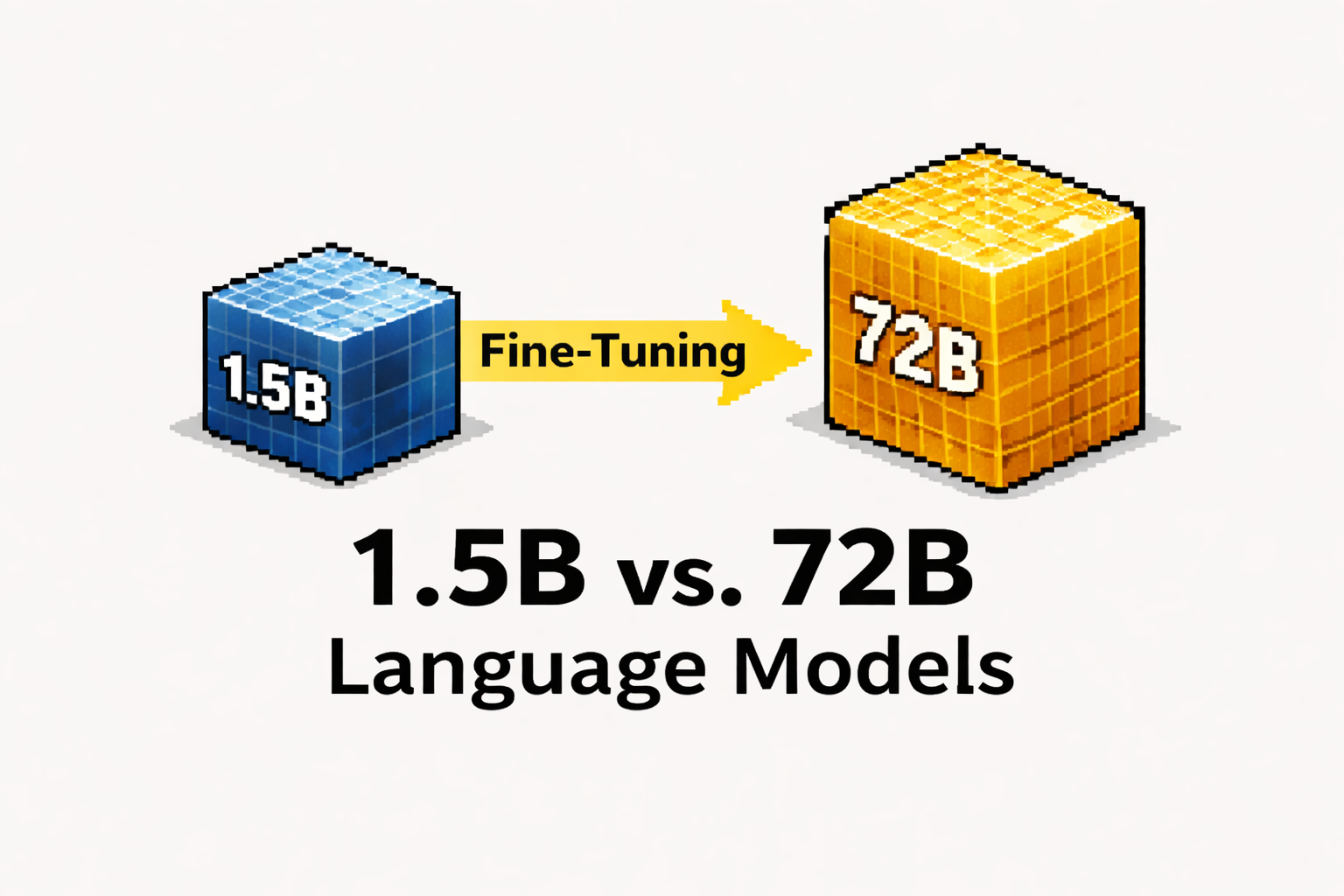
Self-directed collaborative manuscript testing whether LoRA fine-tuning can help a 1.5B LLM approach a 72B model on multi-step algorithmic puzzles, using solver-generated data and structural metrics.
Roominate
A gamified productivity platform built in Godot that transforms task completion into world-building. Integrates AI assistants to break down complex tasks and motivate users through spatial memory and gamification.